CW™700 Down Ultralight Sleeping Bag 29°F / -1.7°C - Naturehike

CW™700 Down Ultralight Sleeping Bag 29°F / -1.7°C

Regular price $189.99 Sale price$170.99 Save $19.00
/
Shipping calculated at checkout.

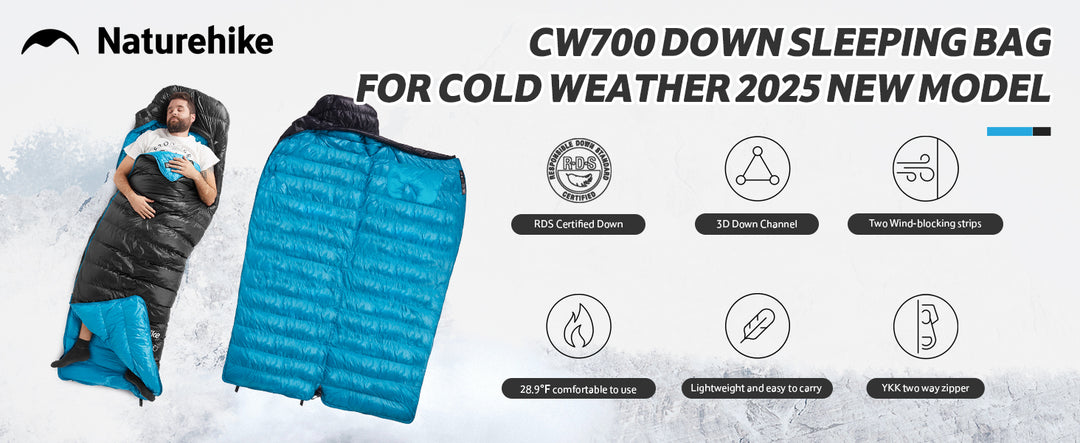
Naturehike CW700 Down Sleeping Bag is designed for cold-weather adventures with a hybrid mummy-envelope design. The mummy-style upper and U-shaped neck collar lock in warmth, while the rectangular lower body allows free movement and comfort. Filled with 700 g of RDS-certified 650FP duck down, it delivers excellent insulation for environments as low as -7.9℃ (17.8℉). With durable ripstop nylon and YKK zippers, the CW700 combines reliability, warmth, and portability for winter camping, backpacking, and mountaineering.

Key Features:

  • Warmer Hybrid Design – Mummy-style head and neck collar for warmth, envelope bottom for roomy comfort
  • Premium Down Insulation – RDS-certified 650FP duck down with 700 g fill, 85% down content
  • Cold-Weather Rating – Comfort temperature -1.7℃ (28.9℉), limit -7.9℃ (17.8℉), suitable for 0℃ environments
  • Two Sizes Available – Medium: 210 × 75 cm, Large: 220 × 85 cm; weight 1.07–1.31 kg (2.37–2.9 lbs)
  • Durable Construction – 20D 400T ripstop nylon with waterproof finish and YKK zippers for long-lasting use
  • Practical & Versatile – Packs compactly (Φ20 × 42 cm / Φ22 × 42 cm), can be fully opened as a down blanket

colour
size
🌿
Labor Day Sale Save 12% OFF on orders with Code: Labor12
Labor12

Thank you for your order!

  • We'll process your order within 2 business days of receiving payment.
  • If any issues arise, we'll notify you promptly.

Estimated delivery times:

  • Local warehouse: 5–10 business days
  • China warehouse: 10–18 business days(may vary by region)

Please note: to ensure your tracking number remains valid—especially on China-origin shipments that may generate intermediate tracking numbers—there may be a short delay before we upload it. We appreciate your patience and support!

We Believe in What We Build

At NATUREHIKE, we understand the importance of reliable gear in the backcountry. That’s why our products are engineered to meet the highest quality standards and rigorously tested before reaching you.

Return & Exchange

Conditions of return


  • Returns must be made within 7 days of receipt.
  • Items must be new, unused, and in original condition.
  • Includes all original tags, packaging, and components.
  • Proof of purchase is required.

Damaged Items

If your product arrives damaged due to packaging issues, please contact us within 3 days of receipt, and we will arrange a replacement.

Warranty

If you encounter an issue covered by the NATUREHIKE Limited Warranty, please contact our team for assistance. We’re here to help you get started.

Contact Us

Selected Image

When choosing a down sleeping bag, consider the temperature rating, fill power, fill weight, shape and fit, total weight, and packed size.

Start with the conditions you expect to encounter. Choose a sleeping bag with a Comfort Rating appropriate for the coldest nighttime temperatures of your trip, and leave some extra warmth margin if you tend to sleep cold.
For backpacking, weight and packed size are also important, so look for a good balance between warmth, weight, and packability. For camping and road trips, you may prefer a roomier shape and prioritize comfort over minimum weight.

Remember that your sleeping bag is only one part of your sleep system. Your sleeping pad, clothing, shelter, humidity, and individual cold tolerance can all affect how warm you feel at night.

Comfort: The temperature at which a cold sleeper can generally sleep comfortably in a relaxed position.
Limit: The lower temperature at which a warm sleeper may still maintain thermal balance, often by sleeping in a curled position.
Extreme: A survival-oriented rating indicating conditions with a risk of hypothermia. It should not be used as the normal temperature for choosing a sleeping bag.

When choosing a sleeping bag, we recommend using the Comfort Rating as your primary reference, especially if you tend to sleep cold.

Naturehike sleeping bag temperature ratings on applicable models are tested according to ISO standards, providing a standardized reference for comparing temperature performance.

Keep in mind that temperature ratings are guidelines rather than guarantees. Your sleeping pad, clothing, weather conditions, humidity, metabolism, and individual cold tolerance can all affect how warm you actually feel.

Fill power and fill weight describe two different characteristics of a down sleeping bag, and both are important when comparing warmth and packability.

Fill Power (FP) measures how much volume a given amount of down can loft and occupy. Higher-fill-power down can trap more insulating air for its weight and generally offers a better warmth-to-weight ratio and compressibility.

Fill Weight refers to the actual amount of down used inside the sleeping bag. More down generally provides more insulation when comparing similar constructions and down quality.

For example, Naturehike sleeping bags may use names such as CW400 and CW700, where the numbers indicate different down fill weights: CW400 contains approximately 400 g of down, while CW700 contains approximately 700 g.

So, a higher fill power does not automatically mean that one sleeping bag is warmer than another. When comparing sleeping bags, consider fill power, fill weight, construction, and temperature rating together.

Down and synthetic sleeping bags each have their own advantages depending on your camping conditions and priorities.

Down insulation offers an excellent warmth-to-weight ratio, loft, and compressibility. It provides strong insulation while packing down small, making it a popular choice for backpacking, cold-weather trips, and adventures where weight and pack space matter.

Synthetic insulation generally performs better in damp conditions and dries faster. While traditional synthetic insulation can be heavier and bulkier than down, advances in fiber technology are improving its warmth-to-weight ratio and packability.

For example, the Naturehike Mujin™ Pro Synthetic Mummy Sleeping Bag uses Sundounce™ Gold-label insulation, featuring a bionic down-like structure with microporous fibers that help trap warm air. This advanced synthetic insulation is designed to improve warmth-to-weight performance and packability while retaining the practical advantages of synthetic fill.

In simple terms:

  • Choose down: If lightweight warmth and excellent compressibility are your priorities.
  • Choose synthetic: If you value performance in damp conditions and easier car
  • Consider advanced synthetic insulation: If you want the practical advantages of synthetic fill with improved weight and packability.

The right sleeping bag should provide enough room to sleep comfortably without leaving excessive empty space that your body needs to warm.

Mummy-shaped sleeping bags fit more closely around the body, helping reduce unnecessary interior space and improve thermal efficiency. They are a popular choice for backpacking and colder conditions.

Rectangular or roomier sleeping bags provide more space to move and can feel more like sleeping under a blanket, making them well suited to camping and users who prioritize freedom of movement.

For size, check the recommended user height and the sleeping bag's shoulder, hip, and foot dimensions when available. The bag should allow you to lie naturally without compressing the insulation at the head or feet.

If you are between sizes, also consider your sleeping position, body shape, and whether you prefer a closer or roomier fit.

Down sleeping bags do not need to be washed frequently. For light dirt or small stains, spot cleaning is usually the best first step. Using a sleeping bag liner, such as the Naturehike Flame™ Ultralight Sleeping Bag Liner, can also help keep sweat, body oils, and dirt away from the sleeping bag and reduce the need for full washing.

When a full wash is necessary, do not dry clean your down sleeping bag. Always check the care label first. In general, use a large front-loading washing machine or hand wash with a down-specific cleaner. Avoid regular detergents, bleach, fabric softener, and top-loading machines with an agitator, as they may damage the down or sleeping bag construction.

Drying is especially important. Tumble dry on low heat in a large dryer, and use clean dryer balls or tennis balls to help break up down clumps and restore loft. Drying can take several hours, and the sleeping bag should be completely dry with no damp clumps inside before storage.

For long-term storage, never leave a down sleeping bag tightly compressed. Store it loosely in a large breathable storage bag or hang it in a cool, dry, well-ventilated place away from direct sunlight and moisture.

When choosing a down sleeping bag, consider the temperature rating, fill power, fill weight, shape and fit, total weight, and packed size.

Start with the conditions you expect to encounter. Choose a sleeping bag with a Comfort Rating appropriate for the coldest nighttime temperatures of your trip, and leave some extra warmth margin if you tend to sleep cold.

For backpacking, weight and packed size are also important, so look for a good balance between warmth, weight, and packability. For camping and road trips, you may prefer a roomier shape and prioritize comfort over minimum weight.

Remember that your sleeping bag is only one part of your sleep system. Your sleeping pad, clothing, shelter, humidity, and individual cold tolerance can all affect how warm you feel at night.

aaa

Comfort: The temperature at which a cold sleeper can generally sleep comfortably in a relaxed position.
Limit: The lower temperature at which a warm sleeper may still maintain thermal balance, often by sleeping in a curled position.
Extreme: A survival-oriented rating indicating conditions with a risk of hypothermia. It should not be used as the normal temperature for choosing a sleeping bag.

When choosing a sleeping bag, we recommend using the Comfort Rating as your primary reference, especially if you tend to sleep cold.

Naturehike sleeping bag temperature ratings on applicable models are tested according to ISO standards, providing a standardized reference for comparing temperature performance.

Keep in mind that temperature ratings are guidelines rather than guarantees. Your sleeping pad, clothing, weather conditions, humidity, metabolism, and individual cold tolerance can all affect how warm you actually feel.

aaa

Fill power and fill weight describe two different characteristics of a down sleeping bag, and both are important when comparing warmth and packability.

Fill Power (FP) measures how much volume a given amount of down can loft and occupy. Higher-fill-power down can trap more insulating air for its weight and generally offers a better warmth-to-weight ratio and compressibility.

Fill Weight refers to the actual amount of down used inside the sleeping bag. More down generally provides more insulation when comparing similar constructions and down quality.

For example, Naturehike sleeping bags may use names such as CW400 and CW700, where the numbers indicate different down fill weights: CW400 contains approximately 400 g of down, while CW700 contains approximately 700 g.

So, a higher fill power does not automatically mean that one sleeping bag is warmer than another. When comparing sleeping bags, consider fill power, fill weight, construction, and temperature rating together.

aaa

Down and synthetic sleeping bags each have their own advantages depending on your camping conditions and priorities.

Down insulation offers an excellent warmth-to-weight ratio, loft, and compressibility. It provides strong insulation while packing down small, making it a popular choice for backpacking, cold-weather trips, and adventures where weight and pack space matter.

Synthetic insulation generally performs better in damp conditions and dries faster. While traditional synthetic insulation can be heavier and bulkier than down, advances in fiber technology are improving its warmth-to-weight ratio and packability.

For example, the Naturehike Mujin™ Pro Synthetic Mummy Sleeping Bag uses Sundounce™ Gold-label insulation, featuring a bionic down-like structure with microporous fibers that help trap warm air. This advanced synthetic insulation is designed to improve warmth-to-weight performance and packability while retaining the practical advantages of synthetic fill.

In simple terms:

  • Choose down: If lightweight warmth and excellent compressibility are your priorities.
  • Choose synthetic: If you value performance in damp conditions and easier car
  • Consider advanced synthetic insulation: If you want the practical advantages of synthetic fill with improved weight and packability.
aaa

The right sleeping bag should provide enough room to sleep comfortably without leaving excessive empty space that your body needs to warm.

Mummy-shaped sleeping bags fit more closely around the body, helping reduce unnecessary interior space and improve thermal efficiency. They are a popular choice for backpacking and colder conditions.

Rectangular or roomier sleeping bags provide more space to move and can feel more like sleeping under a blanket, making them well suited to camping and users who prioritize freedom of movement.

For size, check the recommended user height and the sleeping bag's shoulder, hip, and foot dimensions when available. The bag should allow you to lie naturally without compressing the insulation at the head or feet.

If you are between sizes, also consider your sleeping position, body shape, and whether you prefer a closer or roomier fit.

aaa

Down sleeping bags do not need to be washed frequently. For light dirt or small stains, spot cleaning is usually the best first step. Using a sleeping bag liner, such as the Naturehike Flame™ Ultralight Sleeping Bag Liner, can also help keep sweat, body oils, and dirt away from the sleeping bag and reduce the need for full washing.

When a full wash is necessary, do not dry clean your down sleeping bag. Always check the care label first. In general, use a large front-loading washing machine or hand wash with a down-specific cleaner. Avoid regular detergents, bleach, fabric softener, and top-loading machines with an agitator, as they may damage the down or sleeping bag construction.

Drying is especially important. Tumble dry on low heat in a large dryer, and use clean dryer balls or tennis balls to help break up down clumps and restore loft. Drying can take several hours, and the sleeping bag should be completely dry with no damp clumps inside before storage.

For long-term storage, never leave a down sleeping bag tightly compressed. Store it loosely in a large breathable storage bag or hang it in a cool, dry, well-ventilated place away from direct sunlight and moisture.

aaa

RDS Certified Down for Reliable Warmth

Filled with RDS-certified, traceable down for ethical and safe use. The 3D down channel design ensures even loft and heat retention, while dual wind-blocking strips reduce cold air entry. Whether for high-altitude trekking or winter camping, it provides consistent and dependable warmth.

Professional Warmth Design

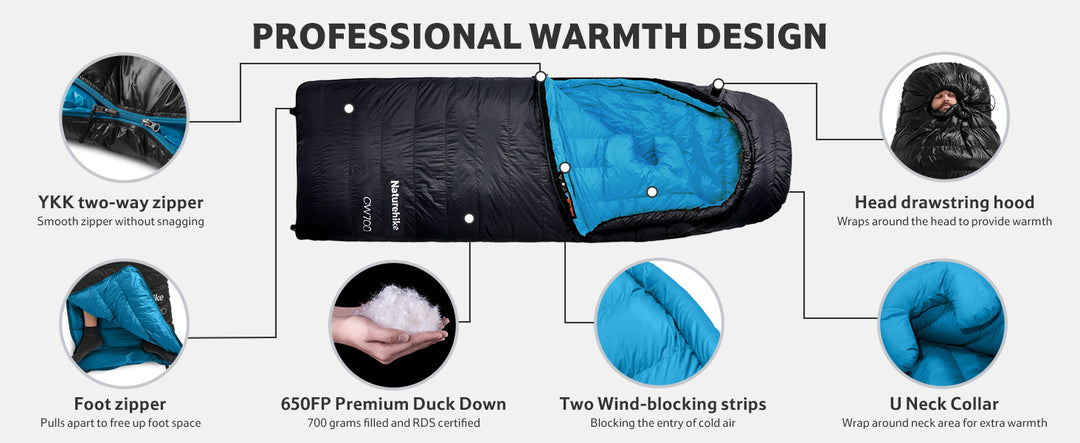
Engineered with 650FP premium duck down (700 g fill), the CW700 provides high thermal efficiency in cold weather. The U-shaped neck collar and adjustable hood wrap securely to retain heat, while dual wind-blocking strips minimize cold air intrusion. Extra details like the YKK two-way zipper and foot zipper add ventilation and flexibility for comfort throughout the night.

Versatile Multi-Use Design

The CW700 can be used not only as a sleeping bag but also as a down blanket or poncho, adapting to different outdoor scenarios. With its two-way zipper, you can easily adjust ventilation and temperature. Fully unfold it to cover the body like a quilt, making it a practical and flexible companion for camping, hiking, and everyday use.

Embrace the Outdoors with Naturehike

Naturehike products are crafted with precision and durability, trusted by outdoor enthusiasts worldwide. Enjoy unparalleled quality and comfort on every adventure.

Breathable Series Fabrics

Breathable Fabrics

Robust and Durable

Robust and Durable

Double Protection

Certified Protection

You may also like