Seek Wind™ Pro Hiking Backpack - Naturehike

Seek Wind™ Pro Hiking Backpack

Sale price$129.99
/
Shipping calculated at checkout.

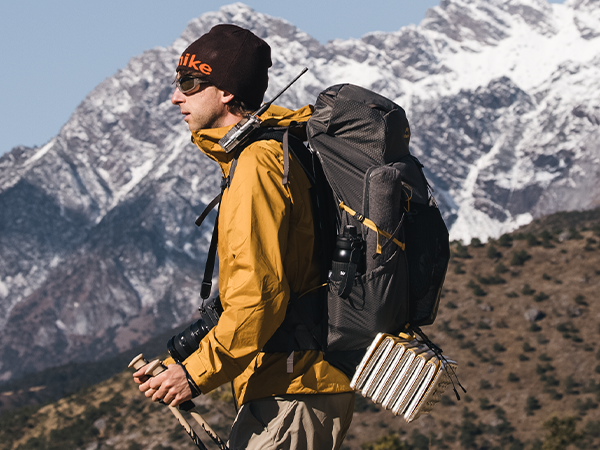
Seek-wind™ Pro Hiking Backpack is designed for multi-day trekkers who suffer from sweaty, sticky backs on the trail. Engineered with the AIR FLOAT suspension system and 3D breathable mesh, it delivers all-around ventilation and ergonomic body-mapping fit — so every step stays cool, dry, and comfortable.

Key Features:

  • AIR FLOAT Suspension System: This Seek-wind™ pro hiking backpack features the AIR FLOAT suspension system, combining a 3D floating back panel with high-strength, breathable mesh fabric. The floating design creates air channels that allow air to circulate freely, eliminating the stuffiness often associated with long hikes, making it the ideal choice for multi-day hikes, mountaineering and camping.
  • Smart Multi-Compartment Storage: Smart organization keeps your gear accessible, not buried. The 35L model features a large-opening removable top lid, oversized side pockets, and large-capacity hipbelt pockets. The 65L model adds two additional water-bottle holsters, a shoulder strap stretch mesh pocket, and a top lid that converts to a waist pack.
  • Versatile attachment system: The camping backpack features a comprehensive attachment system, with fixed webbing at the base allowing items to be attached to side loops, catering to the expansion needs of various activities such as light hiking, mountaineering and camping. The adjustable centre-of-gravity strap and chest strap (with built-in emergency whistle) allow you to adjust the centre of gravity according to different carrying conditions, ensuring stability at all times.
  • Sturdy and durable: Crafted from a main fabric comprising 97% nylon and 3% polyester, this backpacking backpack is designed to withstand the rigours of the great outdoors. It features YKK zips, DURAFLEX and ITW fasteners, and reinforced stitching at all stress points to ensure long-lasting durability. The included rain cover boasts a 2000mm PU waterproof rating, keeping your gear dry in the event of a sudden downpour.
  • Adjustable fit: The 65L model is available in a women’s version (back length 16.9–18.9 in, shoulder straps 16.1 in, hip belt 31.1–48.8 in) and a men’s version (back length 19.3–21.3 in, shoulder straps 17.7 in, hip belt 33.5–51.2 in). The Naturehike backpack can be adjusted to suit your body shape, hugging the contours of your back, whilst the X-shaped hip belt further distributes pressure across the hips, reducing fatigue even during long hikes.

Size
Color
🌿
Labor Day Sale Save 12% OFF on orders with Code: Labor12
Labor12

Thank you for your order!

  • We'll process your order within 2 business days of receiving payment.
  • If any issues arise, we'll notify you promptly.

Estimated delivery times:

  • Local warehouse: 5–10 business days
  • China warehouse: 10–18 business days(may vary by region)

Please note: to ensure your tracking number remains valid—especially on China-origin shipments that may generate intermediate tracking numbers—there may be a short delay before we upload it. We appreciate your patience and support!

We Believe in What We Build

At NATUREHIKE, we understand the importance of reliable gear in the backcountry. That’s why our products are engineered to meet the highest quality standards and rigorously tested before reaching you.

Return & Exchange

Conditions of return


  • Returns must be made within 7 days of receipt.
  • Items must be new, unused, and in original condition.
  • Includes all original tags, packaging, and components.
  • Proof of purchase is required.

Damaged Items

If your product arrives damaged due to packaging issues, please contact us within 3 days of receipt, and we will arrange a replacement.

Warranty

If you encounter an issue covered by the NATUREHIKE Limited Warranty, please contact our team for assistance. We’re here to help you get started.

Contact Us

Selected Image
Dimensions
  • 35L: approx. 29.5 × 18.5 × 60cm / 11.6 ×7.3 × 23.6 in
  • 65L: approx. 26 × 24.5 × 63 cm / 11.6 ×9.8 × 24.8 in
Weight
  • 35L: approx. 1.46 kg / 3.22 lbs
  • 65L (Woman): approx. 1.79 kg / 3.95 lbs
  • 65L (Man): approx. 1.83 kg / 4.03 lbs
Material
  • Main fabric: 97% nylon + 3% polyester
  • Accessories: DURAFLEX fasteners, ITW fasteners, YKK zippers
Selected Image

For day hikes, around 18–30 L is usually enough for water, food, extra layers, and daily essentials. For 1–3 night trips, consider around 30–50 L. For 3–5 night treks, 50–70 L gives you more room for a sleeping system, shelter, food, and additional clothing. Longer trips or cold-weather adventures may require 70 L or more, depending on your gear.

Bigger isn't always better. An oversized backpack adds unnecessary weight and can make it harder to keep your load organized and stable. Choose enough capacity for your essential gear without carrying more pack than you need.

Don't choose a hiking backpack by height alone; torso length matters most.

To measure your torso, locate the C7 vertebra—the prominent bone at the base of your neck when you tilt your head forward. Then find the top of your hip bones, known as the iliac crest. Measure the distance between these two points along your back and compare it with the size range listed for the backpack.

Once the pack is on, the hipbelt should sit securely around the top of your hips, while the shoulder straps should wrap naturally around your shoulders without large gaps. If the backpack has an adjustable torso system, fine-tune the back length before adjusting the other straps.

A properly fitted backpack should feel close and stable without concentrating the entire load on your shoulders.

A well-designed suspension system helps support the load, transfer weight to your hips, stabilize the pack, and improve ventilation and comfort over long distances.

It typically works through a combination of the back panel or frame, shoulder harness, hipbelt, load-lifter straps, and sternum strap. When properly fitted and adjusted, the hipbelt helps distribute the load around your hips, while the shoulder straps and load lifters keep the backpack stable and close to your body.

Ventilation is another important factor, especially on long or warm-weather hikes. For example, the Naturehike Seek-wind™ Pro Hiking Backpack uses an AIR FLOAT suspension system, combining a 3D floating back panel with breathable mesh to create airflow channels between the backpack and your back. Its adjustable fit, center-of-gravity straps, chest strap, and X-shaped hipbelt work together to improve stability and distribute pressure during multi-day hikes.

The best suspension system should match your body shape, pack weight, and hiking conditions. For multi-day trekking or heavier loads, look for good hip support, adjustable fit, load stability, and effective back ventilation.

Good weight distribution can make a backpack feel more stable and comfortable on the trail.

Place heavier items close to your back and around the middle-to-upper part of the pack, rather than letting heavy gear sit far away from your body. Bulky but lighter items, such as a sleeping bag, can usually go toward the bottom.

Keep items you need frequently—such as snacks, water, a rain jacket, navigation tools, or sunscreen—in easy-to-reach pockets or near the top of the pack.

Try to keep the load balanced from left to right, and use compression straps where available to prevent gear from shifting as you move. Avoid hanging too many heavy items outside the backpack, as this can pull the load away from your center of gravity.

A rain cover is a good idea if you expect rain or prolonged wet conditions. Many hiking backpack fabrics offer some water resistance, but that does not necessarily make the entire backpack waterproof—water can still enter through seams, zippers, openings, or other construction points.

A rain cover helps protect the outside of the backpack and can also reduce how much water the pack fabric absorbs during heavy rain.

For moisture-sensitive gear such as down sleeping bags, clothing, electronics, or important documents, consider adding another layer of protection inside the backpack using waterproof stuff sacks, dry bags, or a pack liner.

For extended wet-weather trips, combining external rain protection with internal waterproof storage provides better protection than relying on the backpack fabric alone.

  • After each trip, empty your backpack completely and remove loose dirt, sand, food crumbs, and debris. For light dirt, spot cleaning with lukewarm water, mild soap, and a soft cloth or brush is usually enough.
  • For a deeper clean, always check the care instructions for your specific backpack first. In general, avoid washing a technical hiking backpack in a washing machine or putting it in a dryer, as this may damage fabrics, coatings, foam, or structural components.
  • Pay extra attention to areas that collect sweat and dirt, such as the shoulder straps, hipbelt, back panel, and zippers. After cleaning, allow the backpack to air-dry completely in a shaded, well-ventilated place before storing it.
  • Store your backpack clean and dry, and avoid prolonged exposure to moisture, excessive heat, or direct sunlight when not in use.
Selected Image
Dimensions
  • 35L: approx. 29.5 × 18.5 × 60cm / 11.6 ×7.3 × 23.6 in
  • 65L: approx. 26 × 24.5 × 63 cm / 11.6 ×9.8 × 24.8 in
Weight
  • 35L: approx. 1.46 kg / 3.22 lbs
  • 65L (Woman): approx. 1.79 kg / 3.95 lbs
  • 65L (Man): approx. 1.83 kg / 4.03 lbs
Material
  • Main fabric: 97% nylon + 3% polyester
  • Accessories: DURAFLEX fasteners, ITW fasteners, YKK zippers

For day hikes, around 18–30 L is usually enough for water, food, extra layers, and daily essentials. For 1–3 night trips, consider around 30–50 L. For 3–5 night treks, 50–70 L gives you more room for a sleeping system, shelter, food, and additional clothing. Longer trips or cold-weather adventures may require 70 L or more, depending on your gear.

Bigger isn't always better. An oversized backpack adds unnecessary weight and can make it harder to keep your load organized and stable. Choose enough capacity for your essential gear without carrying more pack than you need.

aaa

Don't choose a hiking backpack by height alone; torso length matters most.

To measure your torso, locate the C7 vertebra—the prominent bone at the base of your neck when you tilt your head forward. Then find the top of your hip bones, known as the iliac crest. Measure the distance between these two points along your back and compare it with the size range listed for the backpack.

Once the pack is on, the hipbelt should sit securely around the top of your hips, while the shoulder straps should wrap naturally around your shoulders without large gaps. If the backpack has an adjustable torso system, fine-tune the back length before adjusting the other straps.

A properly fitted backpack should feel close and stable without concentrating the entire load on your shoulders.

aaa

A well-designed suspension system helps support the load, transfer weight to your hips, stabilize the pack, and improve ventilation and comfort over long distances.

It typically works through a combination of the back panel or frame, shoulder harness, hipbelt, load-lifter straps, and sternum strap. When properly fitted and adjusted, the hipbelt helps distribute the load around your hips, while the shoulder straps and load lifters keep the backpack stable and close to your body.

Ventilation is another important factor, especially on long or warm-weather hikes. For example, the Naturehike Seek-wind™ Pro Hiking Backpack uses an AIR FLOAT suspension system, combining a 3D floating back panel with breathable mesh to create airflow channels between the backpack and your back. Its adjustable fit, center-of-gravity straps, chest strap, and X-shaped hipbelt work together to improve stability and distribute pressure during multi-day hikes.

The best suspension system should match your body shape, pack weight, and hiking conditions. For multi-day trekking or heavier loads, look for good hip support, adjustable fit, load stability, and effective back ventilation.

aaa

Good weight distribution can make a backpack feel more stable and comfortable on the trail.

Place heavier items close to your back and around the middle-to-upper part of the pack, rather than letting heavy gear sit far away from your body. Bulky but lighter items, such as a sleeping bag, can usually go toward the bottom.

Keep items you need frequently—such as snacks, water, a rain jacket, navigation tools, or sunscreen—in easy-to-reach pockets or near the top of the pack.

Try to keep the load balanced from left to right, and use compression straps where available to prevent gear from shifting as you move. Avoid hanging too many heavy items outside the backpack, as this can pull the load away from your center of gravity.

aaa

A rain cover is a good idea if you expect rain or prolonged wet conditions. Many hiking backpack fabrics offer some water resistance, but that does not necessarily make the entire backpack waterproof—water can still enter through seams, zippers, openings, or other construction points.

A rain cover helps protect the outside of the backpack and can also reduce how much water the pack fabric absorbs during heavy rain.

For moisture-sensitive gear such as down sleeping bags, clothing, electronics, or important documents, consider adding another layer of protection inside the backpack using waterproof stuff sacks, dry bags, or a pack liner.

For extended wet-weather trips, combining external rain protection with internal waterproof storage provides better protection than relying on the backpack fabric alone.

aaa
  • After each trip, empty your backpack completely and remove loose dirt, sand, food crumbs, and debris. For light dirt, spot cleaning with lukewarm water, mild soap, and a soft cloth or brush is usually enough.
  • For a deeper clean, always check the care instructions for your specific backpack first. In general, avoid washing a technical hiking backpack in a washing machine or putting it in a dryer, as this may damage fabrics, coatings, foam, or structural components.
  • Pay extra attention to areas that collect sweat and dirt, such as the shoulder straps, hipbelt, back panel, and zippers. After cleaning, allow the backpack to air-dry completely in a shaded, well-ventilated place before storing it.
  • Store your backpack clean and dry, and avoid prolonged exposure to moisture, excessive heat, or direct sunlight when not in use.
aaa

Shoulder-to-Hip Load Transfer System

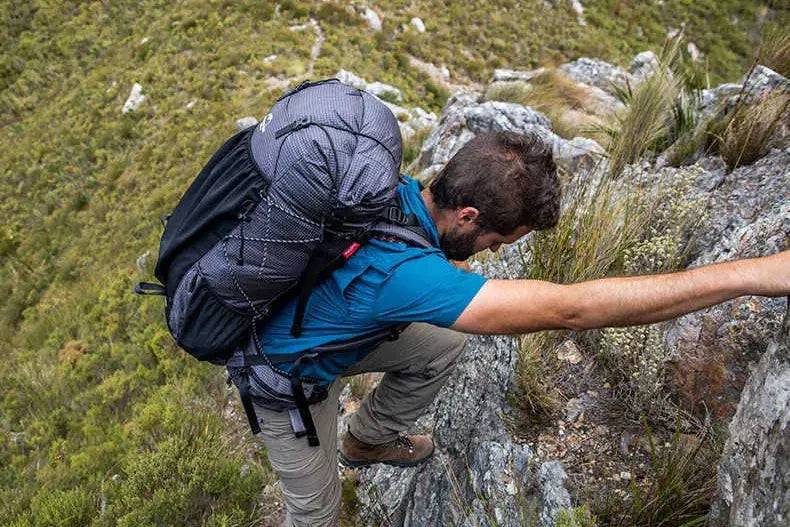
The integrated suspension frame works in harmony with the contoured waist belt to distribute heavy loads evenly across your lower body, reducing shoulder strain and keeping your center of gravity stable on uneven terrain. Whether you're ascending steep switchbacks or descending rocky slopes, this system keeps the pack planted firmly on your hips — so your shoulders stay relaxed and your legs do the work.

Weather-Ready Protection

The main fabric is woven from 97% nylon and 3% polyester for water resistance, while premium YKK zippers, DURAFLEX and ITW buckles resist corrosion and maintain smooth operation in wet conditions. An included raincover provides a 2000mm PU waterproof rating — ideal for light to moderate rain and misty trail conditions.

Grab Your Gear Without Digging

A front vertical zip opens directly into the main compartment — grab your mid-layer, map, or trail snacks without unrolling the top or digging through your entire pack. At the bottom, reinforced lash points let you strap on a bulky jacket, tent, or sleeping pad externally, freeing up internal space and keeping essential gear within arm's reach. Small details that make a big difference when you're on the trail.

Embrace the Outdoors with Naturehike

Naturehike products are crafted with precision and durability, trusted by outdoor enthusiasts worldwide. Enjoy unparalleled quality and comfort on every adventure.

Breathable Series Fabrics

Breathable Fabrics

Robust and Durable

Robust and Durable

Double Protection

Certified Protection

You may also like